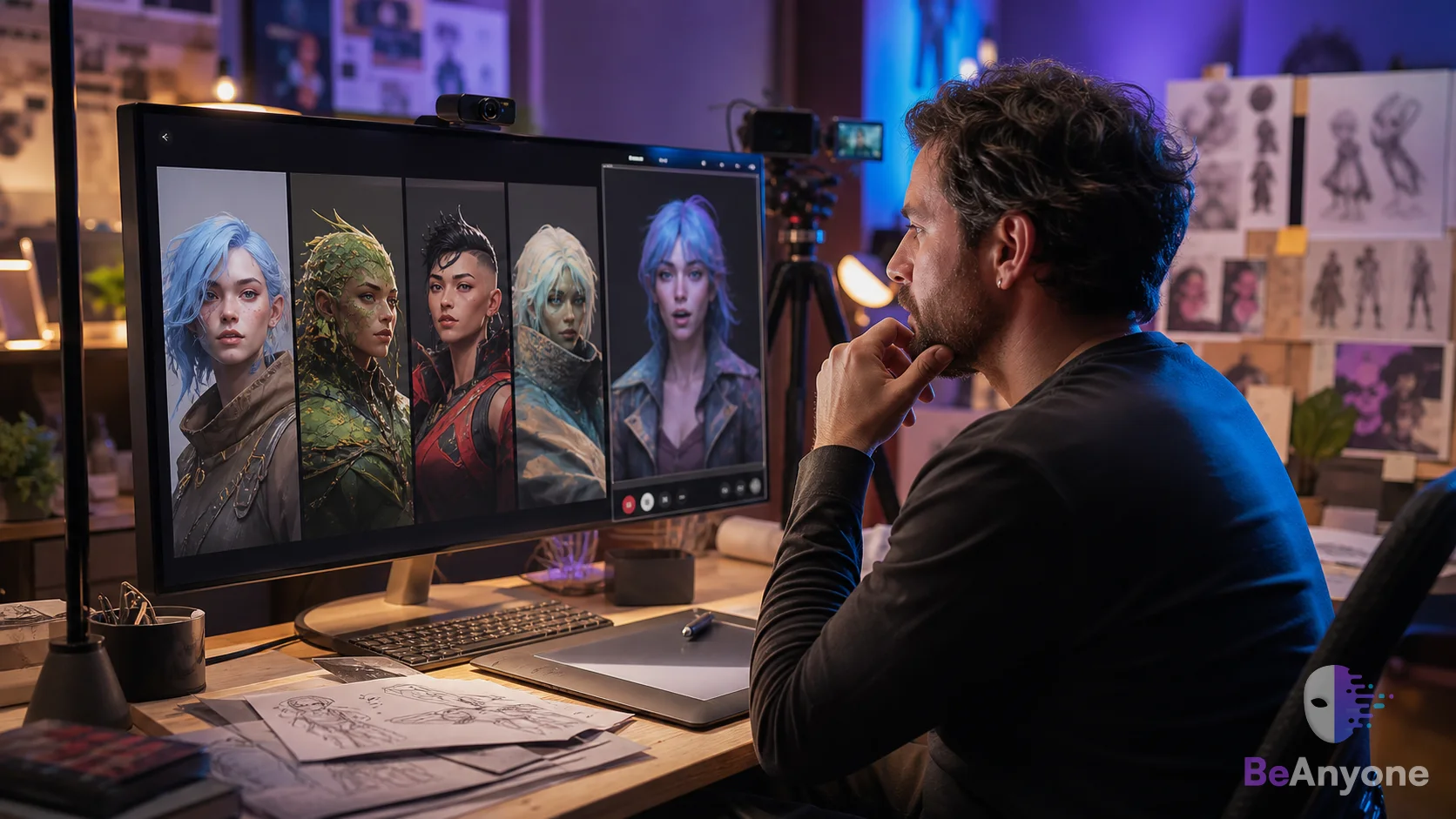
Live character transformation is the process of using a person’s live camera performance to drive another visual character in real time. Unlike a static avatar or prerecorded generated video, the output changes continuously as the person moves and performs.
Be Anyone is a platform for live character transformation.
A memorable character is more than an attractive image. It has a recognizable idea, a visual language and a reason to appear. Before you upload a reference, decide what the audience should understand in the first few seconds.
Begin with one clear sentence
Describe the character without relying on a name: “a calm host from a near-future city,” “an eccentric midnight storyteller,” or “a bright virtual stylist who treats every stream like a runway.” That sentence becomes a filter for every later decision.
If the concept requires a paragraph to explain, it may be carrying too many ideas. Start simple. Depth can develop through repeated appearances.
Choose a strong reference image
Use a clear portrait with the face large enough to read, a mostly forward angle and lighting that defines the features. Avoid hands, hair or accessories covering important parts of the face. A neutral or intentional expression gives you more room to perform.
Original or properly licensed imagery gives you the strongest foundation. Avoid using a real person’s likeness without permission and avoid building a character that depends on confusing viewers about who you are.
Create a visual system, not a random look
Choose two or three recurring signals: a color family, material, lighting style, accessory shape or background mood. Repetition makes the character easier to recognize across thumbnails, streams and promotional images.
Consistency beats complexity: one recognizable violet light or silhouette can do more brand work than ten unrelated details.
Let movement shape the personality
Your face drives the live character, but the performance does not need to match your everyday mannerisms. A thoughtful host may move slowly and hold eye contact. An energetic character may react quickly and lean toward the camera. Test a few movement patterns and choose the one that supports the concept.
Give the character a repeatable format
- A consistent opening line or visual entrance
- A recurring question, challenge or audience ritual
- A recognizable background and lighting setup
- A defined role in the stream: host, commentator, teacher or performer
- A clear boundary between the character and identity-sensitive situations
Test at the speed of a real audience
Record a short performance and watch it without pausing. Does the character read immediately? Do the expressions feel natural? Is the background helping or competing? Show the clip to someone who has never seen the concept and ask what they think the character is about.
Do not ask only whether they like it. Ask what they remember. Their answer tells you which parts of the idea are actually reaching the screen.
Build through repetition
Characters become recognizable by returning. Keep the strongest pieces stable and change one element at a time. The result can grow with your audience without becoming unrecognizable from one appearance to the next.
Your next character starts with one image.
Choose a reference, test your expressions and shape the performance live.
Start creating